it’s about understanding a phenomena in real-life context
when the phenomena is complex, context-dependent, not well-defined
when boundaries in the research are not clear or more in-depth analysis is needed, qualitative research methods help
Data collection techniques
Interviewing
can have multiple formats:
descriptive: provide rich understanding of the constructs
exploratory: define new questions, constructs etc.
explanatory: explore causal relationships
are semi-structured (between rigid survey and open conversation)
a list of questions and topics is prepared, but the interview could deviate from the prepared topics to explore interesting area
benefits:
rich, targeted, insightful
drawbacks:
reflexivity (the person being interviewed often responds with what the interviewer wants to hear and the fact he is being interviewed changes his way of thinking)
possible inaccuracy (poor answers), bias
Observation
direct observation (researcher is not involved)
sitting in meetings, observing, how people work, take notes, do not participate
participant observation (researcher is involved)
researcher participates, which gives a better insight, but the participation influences, what happens
Documentation
analyzing documents as data sources (meeting minutes, policy documents, emails, project reports, system logs etc.)
documents are valuable, because they were not created for the research, so they don’t suffer from reflexivity
types of documents
structured (financial reports)
semi-structured
unstructured (emails)
Triangulation
using multiple data sources or methods to study the same phenomenon
triangulation across:
sources (interviews + documents)
methods (quantitative + qualitative)
researchers (more researchers studying the same)
theories (different theoretical lenses)
Data analysis techniques
coding = assigning labels to chunks of data
open coding = uncovering concepts with data, then labelling them with higher-level categories
going line by line and labelling what I see
axial coding = organizing concepts into causal relationships
using codes from the open coding
selective coding = identify central categories and relate other concepts to them
out of used codes and relationships → central points
memoing = subjective reflection about what was happening
useful for guiding the future research
e.g. when doing coding ⇒ write the researchers inside thoughts, interesting connections, relations with other researches etc.
critical incidents
identify and examine series of events (to explore relationships between constructs)
not analyzing everything, only the critical points
content analysis
semantic analysis of text (could be also coding)
conceptual content analysis = presence, frequency of concepts
relational content analysis = how are the concepts related in a text
discourse analysis
structuring and unfolding a communication (e.g. a debate)
“how it is said” (e.g. manager saying “we did it” or “I did it”)
Rigor in qualitative analysis
dependability (reliability)
another research with the same process should reach similar conclusions
credibility (internal validity)
does it really reflect reality?
transferability (external validity)
does it apply in different setting?
note: it does not aim to be generalized, but the findings and patterns could be applicable somewhere else as well
Case study
to investigate a current phenomenon within its real-life context in depth
using multiple data sources and methods
benefits:
richness, depth, real-world context, new emerging concepts
drawbacks:
problems with (controlled deduction, replicability, control mechanisms)
Action research
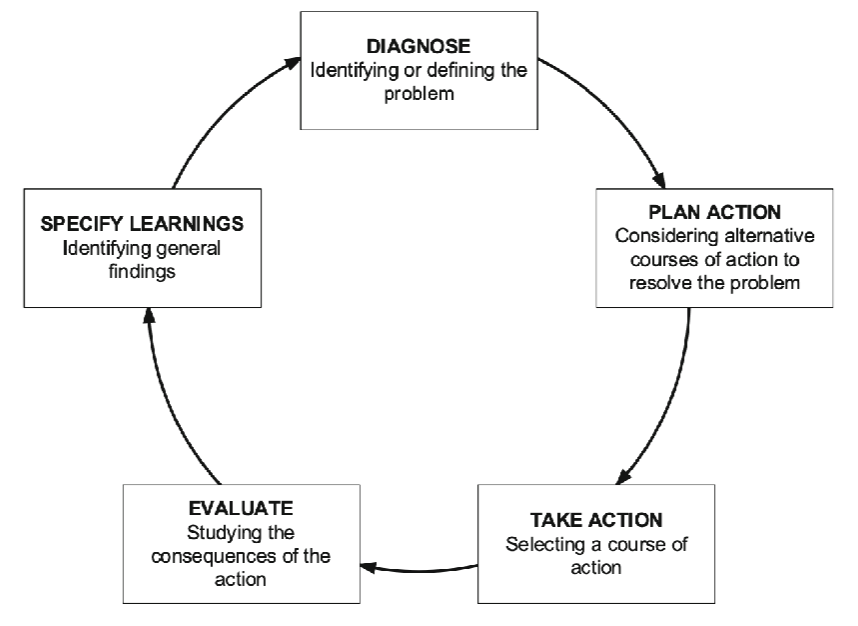
introducing changes or interventions to some context and studying the effects
the researcher = the agent of change
for solving current organizational problems while contributing to science (two goals at once)
actually making my hands dirty distinguishes this method from pure consulting
we can use the experience in another cycle (building knowledge base)
Grounded theory
a new theory, which is inductively generated based on (grounded in) qualitative data that is systematically collected and analysed
we do not start with theory or with a strong theoretical framework
characteristics:
focus on theory building (not testing it)
prior domain knowledge should not lead to pre-conceived hypothesis